Pipeline Road Birding
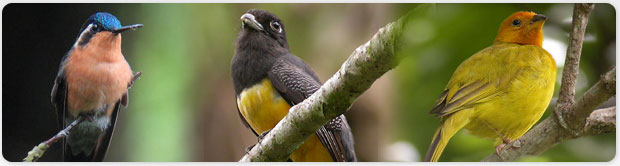
Pipeline Road “Famous birds” Trogons, Toucans and Flycatchers
This road offers great birding opportunities; it goes 17 km north at the east bank of the Panama Canal, starting at the end of the Gamboa town. During World War II a pipeline was built to transfer fuel from one ocean to the other and today the road built for this purpose is one of the birdiest locations in Central America. Located at the Soberania National Park, only a 40- minute drive from Panama City, the diversity of pipeline road can be attributed to the habitat heterogeneity in the park; secondary, old growth forest, swamps and streams.
If army ants are found, several professional ant-followers can be seen; Spotted Antbird, Bicolored Antbird, Ocellated Antbird, Chestnut-backed Antbird and the prized Rufous-vented Ground-Cuckoo, if you are very lucky!. Manakins include the Golden-collared Manakin, Blue-crowned Manakin and Red-capped Manakin. Pipeline is well known for its trogons; five of them can be seen in a very lucky day: Slaty-tailed Trogon, Gartered Trogon and Black-throated Trogon are the most common. The long never ending whistle of the Great Jacamar reveals the presence of this iridescent bird.
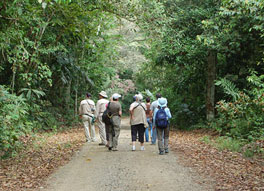
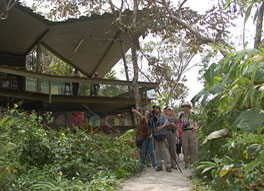
It is easy to see birds around fig trees, such as Purple-throated Fruitcrow, Scarlet-rumped Cacique, and several species of toucans. Red-lored Parrots are always present, and in the wetter areas Brown-hooded Parrots.
Cinnamon Woodpecker is common in the first part of the road as well as Black-cheeked Woodpecker, Crimson-crested Woodpecker and Lineated Woodpecker. This road is particularly good for woodcreepers, being the commonest of all, the Cocoa woodcreeper; with more luck, Barred Woodcreeper and Plain-brown Woodcreeper can be added too.
At pipeline there is always the possibility to find rare Raptors like: Collared Forest-Falcon, Semiplumbeous Hawk, or a Black Hawk- Eagle. The wetland areas before Pipeline should be scanned for Rufescent Tiger-Herons, secretive White-throated Crake, Jacanas, Snail Kites and maybe a Limpkin.
Birding The Metropolitan Park
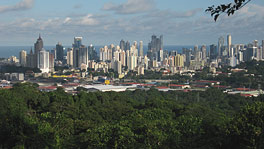
With a list of 267 bird species, the Metro Park is the largest tropical forest park within the limits of a Latin American City. These 265 hectares forest is home of the national endemic Yellow-green Tyrannulet and a curious little monkey, the Rufous-naped Tamarin. The location of this park within the limits of the city makes this reserve one of the most convenient birdwatching spots on the planet.
A partial gravel road (Titi Monkey) takes you to a lookout (mirador) where visitors can see great views of the city. At the beginning of the road, Whooping Motmots are very common near the forest floor, Rufous-and-White Wrens are always present in the bushes, Rufous-breasted Wrens about 10 feet high on the dense tangled vines are fairly common too. The Lance-tailed Manakins are always heard and most of the time seen along the road. Look carefully when watching Greenlets; Lesser Greenlets, Golden-fronted and
Scrub Greenlets move together on the canopy borders along the road.
This metro park is one of the best places in Panama to look for the sensational Rosy-thrush Tanager, its beautiful notes reveal its presence, but it is usually a hard bird to see. Flycatchers are a main target, being the Tropical-Kingbird, Streak Flycatcher and Dusky-capped Flycatcher very common. Gumbo Limbo trees are good for Red-legged Honeycreepers, Green-Honey Creepers, Golden-hooded Tanagers and White-winged Becards.
 Among Woodpeckers the Crimson-crested Woodpecker and Red-crowned Woodpecker are present most of the time; Keel-bill Toucan and Collared Aracari are common on the cecropia trees too. In the bushes at low level the Dusky Antbird never stops singing. Once near the top of the hill when you have the canopy at eye level look for the Green-shrike Vireo in the darkness.
Flying in between cecropias trees Plain-colored tanagers move always in groups, Palm Tanagers, Blue-gray Tanagers and Crimson-back Tanagers are abundant too.
All these extraordinary birds within the city limits make this park one of the most interesting birding places in Central America, and that’s one fact that Panamanians are always proud to say.
Birding Old Gamboa Road
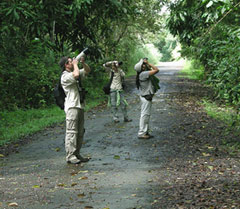 This is one of the "hot spots" on the east bank of the Panama Canal Corridor; it is located at the southern most part of the Soberania National Park, only a 30-minute drive from Panama City. It contains semideciduous forests and it also features the Summit Ponds.
The pond is good to find nesting Boat-billed Herons. Capped Herons are seen during certain times of the year and the very rare Agami Heron has been seen too. Perching on the logs, coming out of the water, look for Mangrove Swallow and Lesser kiskadee.
These Rainforests are very similar to the ones found in the Metro Park; some of the species that occur there may be present here too; Lance-tailed Manakin, Rosy-thrush tanager, Dusky Antbird and White-bellied Antbird are some of them. Some rare possibilities are Royal Flycatcher, Crane Hawk and Pheasant Cuckoo.
Birding Achiote
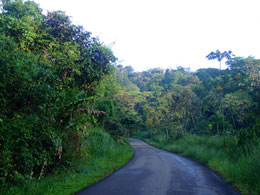 North on the Caribbean west bank of the Panama Canal is located, the famous Achiote Road; being compared in productivity with the Pipeline Road, this area contains mostly evergreen forest; the site is well known for its diurnal raptors. The road is located contiguous to the San Lorenzo National Park. Here Gray-headed kite, King Vulture, Short-tail Hawk, White Hawk and Swallow-tail Kite are frequently seen.
In the area is located the Achiote town, a community based ecotourism project managed by Ceaspa. They have a visitor center and a refuge open to visitors with a great look out on the rear side of the center; they also have a restaurant ahead of the center that serves local food. Ceaspa keeps the Trogon Trail, a short loop before town. This trail sometimes can be very productive; it is a good place to find White-tail Trogons, Antbirds, Southern Bentbill, Speckled Mourner, Barred Woodcreeper and White-headed Wrens.
Some interesting birds seen along the road are Spot-crowned Barbet, Pied Puffbird, Montezuma Oropendola, Great Antshrike, Band-tailed Barbthroat, Long-tail Tyrant, and Black-headed Saltator.
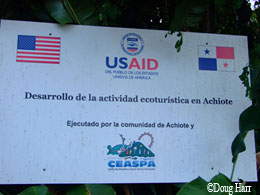
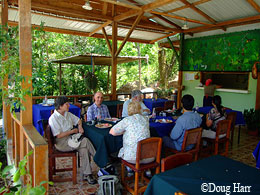
San Lorenzo National Park: This Park sits on the western Caribbean Bank of the Panama Canal. The main entrance of the park is located where Fort Sherman, a Former US army base used to be. There is a nice dirt road of 9 km that bisects the park and is much recommended to do some wildlife viewing early in the morning. At the end of the road you come across the San Lorenzo Castled nestled at the top of a cliff, overlooking the entrance of the Chagres River.